


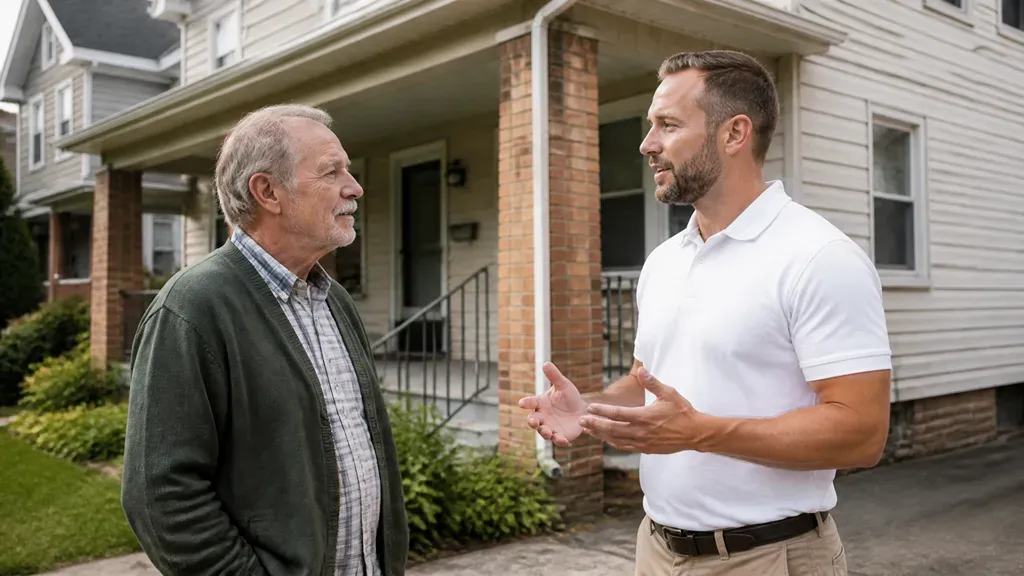
Who Buys Houses From Investors in Cleveland
The Cleveland real estate market attracts several distinct types of investors, each with different goals, timelines, and price points. Knowing who you are talking to matters because it affects what they can offer and how the transaction will unfold.
Cash home buyers. These are companies or individuals - like Chris Buys Homes Cleveland - who purchase properties directly in cash, typically as-is, with the intent to renovate and resell or hold as a rental. Cash buyers can close quickly (often 7 to 21 days) because there is no mortgage approval process. They make their money on the buy side, which means their offers are typically below full retail market value, but the trade-off is certainty, speed, and no repair costs on your end.
Fix-and-flip investors. Flippers buy properties in below-average condition, renovate them, and resell on the retail market. They are primarily interested in properties with cosmetic issues or deferred maintenance - kitchens and bathrooms that are outdated, roofs that need replacement, unfinished basements. If your home needs work, a flipper may be your most motivated buyer.
Buy-and-hold landlords. These investors buy properties to rent out long-term. They are typically interested in neighborhoods with stable rental demand and tend to be more sensitive to current rent levels and property condition than flippers. Buy-and-hold investors often close more slowly than cash buyers because they may use financing, but they can be a good fit for landlords looking to exit a rental property with a sitting tenant.
Wholesalers. Wholesalers are not buyers themselves - they get a home under contract at a low price and then assign that contract to a cash buyer or flipper for a fee. Working with a wholesaler is fine, but understand that there is an assignment fee baked into the process, which typically means a lower net price for you compared to selling directly to the end buyer. Always ask whether you are dealing with the actual buyer or a wholesaler who will assign the contract.
What Investors Look for in a Cleveland Property
Understanding what makes a property attractive to investors helps you set realistic expectations and present your home in the best light during any initial walkthrough.
Price relative to condition and neighborhood. Investors buy based on numbers. The offer you receive will reflect the estimated after-repair value of the home in that specific Cleveland neighborhood, the projected cost of repairs, and the investor’s required margin. In a neighborhood where renovated homes sell for $180,000, an investor might offer $90,000 to $120,000 depending on repair scope. That math is not arbitrary - it reflects carrying costs, transaction costs, contractor bids, and profit margin.
Condition and repair scope. Investors typically welcome properties that traditional buyers would pass on - foundation cracks, roof damage, fire or water damage, code violations, hoarding situations, problem tenants. These are actually where investors add the most value. You do not need to fix anything before selling to an investor.
Clear title. Every investor needs to be able to close with a clean chain of title. Inherited properties with multiple heirs, properties with unresolved liens, or homes with open code violations can complicate (but rarely prevent) a sale. A reputable investor will work with a title company early to identify and resolve any issues before closing.
Timeline flexibility. Investors generally prefer to close quickly, but most will work around a reasonable timeline if you need extra time to move, coordinate with an estate, or wait for a lease to expire. Ask upfront whether the timeline is negotiable.
Homeowners in Mentor and the Lake County area who have older homes or properties that need significant updates often find that selling to an investor is a significantly easier process than listing through a traditional agent. Visit our Mentor home buying page to see what a cash offer might look like for your property.
How the Investor Purchase Process Works in Cleveland
The process of selling your home to a reputable investor is straightforward. Here is what to expect from initial contact through closing:
Step 1 - Initial contact and property information. You reach out to the investor (by phone, form, or email) and provide basic information about the property: address, approximate condition, timeline you are working with, and any known issues. Most investors will ask a few follow-up questions before scheduling a walkthrough.
Step 2 - Walkthrough or virtual assessment. A reputable investor will want to see the property before making a firm offer - either in person or, in some cases, through photos and video. Be upfront about known problems. Investors price in issues they discover after the offer far less favorably than issues disclosed upfront.
Step 3 - Written cash offer. After the walkthrough, the investor provides a written offer with a proposed purchase price, closing timeline, and any contingencies. Review this carefully. A reputable investor will not pressure you to sign immediately. The offer should include a clear closing date (or a date range), and any earnest money deposit terms.
Step 4 - Title and escrow. Once you accept, the investor opens an escrow with a title company. The title company performs a title search, identifies any liens or clouds on title, and prepares closing documents. In Ohio, the closing typically occurs at a title company or attorney’s office.
Step 5 - Closing and payment. On closing day, you sign the deed and transfer documents, and the title company disburses funds to you (and to any lienholders). Cash closings are fast - the entire process from acceptance to close can take as little as 7 days if title is clean.
What to Ask Before Accepting an Investor Offer
Not all investor offers are equally straightforward. Before you sign anything, make sure you have answers to these questions:
- Are you the actual buyer, or will you be assigning this contract? If you are dealing with a wholesaler, ask for proof that the end buyer is already lined up and has the funds to close.
- What is the earnest money deposit, and is it non-refundable? A serious buyer puts up earnest money. Ask what the deposit amount is and under what circumstances it is refundable.
- How long is the inspection/due diligence period? Many investor contracts include a due diligence window during which the buyer can walk away. Ask how long it is and what happens to the earnest money if they cancel.
- Who pays closing costs? Investor offers are sometimes structured to include seller-paid closing costs. Understand what you will net after all fees before comparing offers.
- Can you provide references or proof of recent purchases? A reputable local investor should be able to point to recently closed transactions in the Cleveland area. Ask for references from past sellers.
Sellers in Munroe Falls and the surrounding Summit County communities who are comparing multiple investor offers should focus on net proceeds after fees, not just the headline number. Visit our Munroe Falls home buying page if you would like to get a no-pressure written offer to compare.
Understanding the Price Difference
The most common concern sellers have about selling to an investor is the price. Investor offers are typically below what a fully renovated home would fetch on the open market. That is a real trade-off, but it is worth understanding what you are actually comparing.
When you sell through a traditional agent, the costs you absorb include: agent commissions (typically 5 to 6 percent of the sale price), closing costs (1 to 3 percent), staging and repairs before listing, and carrying costs during the listing period (property taxes, insurance, utilities, mortgage payments). By the time all of those costs are paid, the net proceeds from a traditional sale are often closer to the investor offer than the headline list price suggests.
An investor offer gives you certainty - a specific number, a specific date, no repair costs, no commissions, and no risk of the deal falling through due to buyer financing. Whether that trade-off makes sense depends on your timeline, the condition of your home, and your financial situation. The right answer is different for every seller.
Ready to See What an Investor Offer Looks Like?
If you are considering selling to an investor and want to understand what a written cash offer for your Cleveland-area home would look like, we can give you one with no obligation and no pressure. Sellers in North Olmsted and the west side suburbs often find the investor process a much cleaner experience than they expected - no showings, no waiting, no surprises at closing. Visit our North Olmsted home buying page or call Chris at (216) 677-2169 or fill out our contact form. We will walk you through the process, answer your questions honestly, and give you a real number you can use to make an informed decision. Your fresh start is closer than you think.